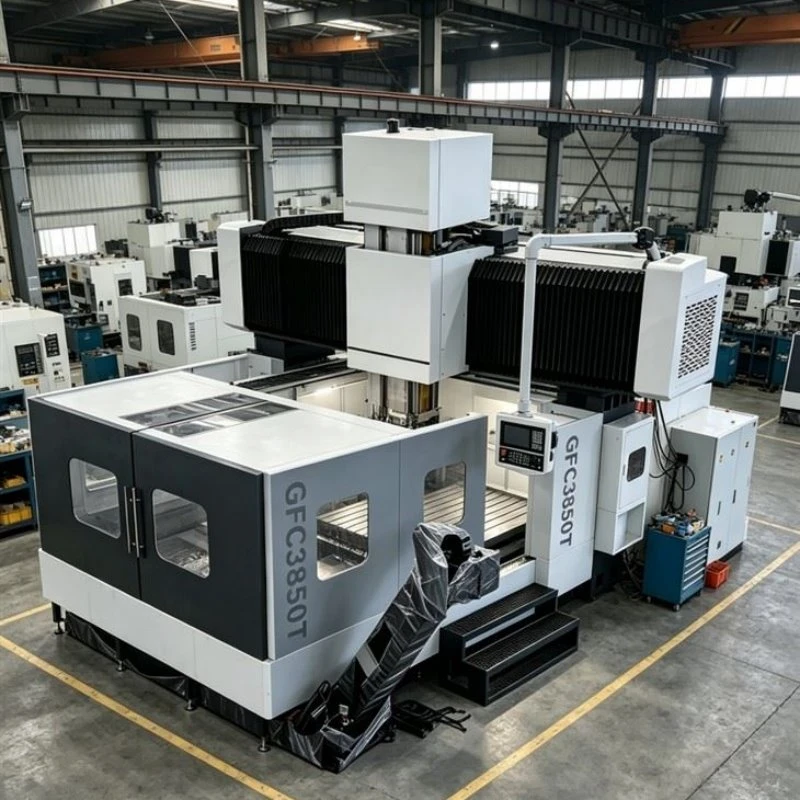
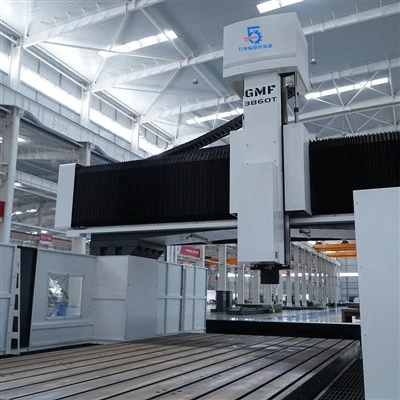
If you're in the market for a fixed gantry CNC mill, one of the most common questions I get from new buyers is, "What size motor do I actually need?" It's easy to get overwhelmed by specs, and picking the wrong motor can lead to everything from slow cuts that kill productivity to burnt-out parts that cost you time and cash. As a supplier of fixed gantry CNC equipment, I've worked with everything from small machine shops running 10-hour days to large fabrication plants cranking out heavy aerospace parts, so I've seen firsthand how motor size makes or breaks a machine's performance. Let's break this down like we're chatting over a coffee, no jargon overload-just real-world advice you can actually use.
First, let's get clear on what a fixed gantry mill is, because that's the base for understanding its motor needs. Unlike bridge-type gantries that move across a horizontal beam, fixed gantry mills have the worktable stationary, and the entire gantry (spindle, carriage, all of it) moves along the X and Y axes. That fixed structure is a big plus for rigidity, but it also affects how much power the motors need. If you're curious about the broader category of gantry-based machining, check out our page on Gantry Machining to see how fixed gantries stack up against other setups.
Now, motor size for CNC mills boils down to two key areas: axis motors (that move the gantry) and spindle motors (that spin the cutting tool). Most new buyers fixate on spindle size, and while that's important, the axis motors are often the unsung heroes that keep cuts accurate and consistent. Let's start with spindle motors first, since that's what does the actual cutting. Spindle motor size is measured in horsepower (HP), and the right HP depends on what materials you're cutting, how fast you're cutting them, and how deep your cuts are.
If you're mostly machining soft stuff like wood, aluminum sheet metal, or plastic for signs or prototypes, you can get away with a 3 to 5 HP spindle. That's more than enough for light cuts at high speeds, which is perfect for small to medium shops or hobbyists scaling up. But if you're working with harder materials like stainless steel, titanium, or thick steel plate-think aerospace parts, heavy equipment components, or mold making-you'll need a bigger spindle, usually 7.5 HP or more. Why? Hard materials require more torque to push the cutting tool through without stalling, and a underpowered spindle will bog down, cause tool wear, or even break tools mid-cut. I've seen customers try to skimp on spindle HP for stainless steel, and it never ends well-they end up burning through tools twice as fast and spending more on replacements than they would have on a slightly bigger motor.
Next up: the axis motors, which move the gantry along X, Y, and Z axes. These are measured in torque (usually Nm or lb-ft) rather than HP, and size here depends on two main things: the weight of the moving gantry and the load you're putting on the table. A fixed gantry's moving parts (gantry beam, carriage, spindle, and any fixtures) can weigh anywhere from 500 lbs for a small hobby setup to 10,000 lbs or more for industrial models. The bigger the moving mass, the more torque you need to accelerate and decelerate it quickly-super important for maintaining accuracy on repetitive cuts or when making sharp turns in a part.
For small fixed gantry mills (worktable size under 4x8 ft) with light moving parts, 1 to 2 Nm per axis is usually enough. That works for shops doing small custom parts, prototypes, or general machining of non-ferrous metals. For medium-sized mills (8x12 ft to 16x32 ft) that handle medium loads like 1-inch aluminum plate or small steel components, you'll want 2 to 5 Nm per axis. Larger industrial fixed gantry mills, used for thick steel, large weldments, or heavy mold work, need 5 Nm or more per axis to move that massive gantry smoothly without lag. A lot of budget mills cut corners here with underpowered axis motors, and you'll notice it right away-when you're cutting a long straight line, the gantry lags at the end, leading to wavy cuts and parts that don't fit.
Wait, but there's a catch: motor size alone isn't the only factor. You also have to match the motor to the drive system, the lead screw or ball screw pitch, and the gear ratio. For example, a bigger motor on a machine with a fine-pitch ball screw will have more precision than a smaller motor on a coarse screw, even if the HP is lower. That's why it's not a one-size-fits-all number-you can't just pick a 10 HP motor and call it a day. Let's use an example I see all the time: a customer needs a fixed gantry mill to cut 2-inch thick steel for custom machinery frames. They're tempted to go with a 7.5 HP spindle, but their machine has a 16 ft gantry that weighs 8,000 lbs. If they pair that 7.5 HP spindle with 2 Nm axis motors, the spindle might cut the steel fine, but the axis motors will struggle to move the heavy gantry at the required speed, leading to slow cycle times and inaccurate cuts. In that case, they need to bump up to a 10 HP spindle (to handle the heavy steel cuts) and 5+ Nm axis motors (to move the heavy gantry), plus a matched drive system that can deliver consistent torque across all axes.
Another common mistake buyers make is confusing fixed gantry mills with other gantry setups, like gantry lathes. A Gantry Lathe, for example, is designed for rotating parts, so its motor needs are totally different-lower spindle RPM, higher torque for turning round stock, compared to our fixed beam milling machines which are for stationary workpieces. That's why it's crucial to be clear on your primary use case before sizing motors. If you're only doing flat milling, drilling, and routing, a fixed beam CNC gantry milling machine is the right fit, and you can size motors based on your specific material and load requirements.
Let's also talk about variable frequency drives (VFDs) here, because they work hand-in-hand with motor size. A VFD controls the speed of the spindle motor, and if you have a 10 HP spindle, you need a VFD rated for at least 10 HP to handle it. Undersized VFDs will cause the motor to overheat, especially when running at low speeds (which is common for cutting hard materials), and that shortens the motor's lifespan. I've had customers come to me with a budget mill they bought online that had a 10 HP spindle paired with a 5 HP VFD-within 3 months, the motor seized up and they had to replace the whole unit. Don't skip on the VFD matching, it's part of the motor sizing puzzle.
Now, let's cover some real-world scenarios to make this concrete, because numbers can be abstract. Scenario 1: A small sign shop cutting 1/4-inch acrylic and 1/2-inch aluminum sheets, worktable size 4x8 ft. They run 8-hour days, 5 days a week. Motor setup here: 3-5 HP spindle (enough for high-speed cuts on thin materials), 1.5-2 Nm axis motors (light moving gantry, under 500 lbs), paired with a matched VFD. That's more than enough, and they'll get 10+ years of use out of the setup with proper maintenance.


Scenario 2: A medium job shop making custom agricultural parts, cutting 1-inch aluminum plate and 1/2-inch steel, worktable size 12x20 ft. They need to make parts quickly, so cycle time is key. Motor setup: 7.5 HP spindle (handles medium cuts on steel and aluminum), 3-4 Nm axis motors (gantry weight around 3,000 lbs, need enough torque for fast moves), VFD sized for 7.5 HP. This setup balances speed and power, so they can hit production targets without sacrificing part quality.
Scenario 3: An aerospace shop machining titanium components, thick steel weldments, and large mold bases, worktable size 20x40 ft. They need ultra-precise cuts and the power to cut hard, dense materials. Motor setup: 10-15 HP spindle (low-speed torque for heavy titanium cuts, high RPM for finishing passes), 6-8 Nm axis motors (heavy gantry, over 10,000 lbs, need consistent torque for smooth, accurate movement), high-torque VFDs. This is the industrial-grade setup, and while it's more expensive, the precision and durability mean less downtime and fewer scrap parts, which pays for itself in the long run.
Wait, what about servo vs. stepper motors? That's another question I get all the time, and it ties into motor size. Stepper motors are cheaper, but they lose torque at high speeds, so they're best for small, light fixed gantry mills (the 3-5 HP spindle, 1.5-2 Nm axis setup I mentioned earlier). Servo motors, on the other hand, maintain torque across all speeds, so they're better for medium and large mills that need consistent performance at high speeds. If you try to use stepper motors on a 12x20 ft mill, you'll get lag, lost steps, and inaccurate parts-no matter how "big" the stepper is. That's a big reason why industrial fixed gantry milling machines use servo motors exclusively, and it's part of the sizing decision too.
A lot of buyers also ask if they can upgrade motors later, and the short answer is yes, but only if the machine's frame and drive system are rated for a bigger motor. If you buy a budget mill with a frame that's only built for a 5 HP spindle, you can't just swap in a 10 HP spindle-it'll strain the frame, cause vibration, and lead to premature wear. That's why buying from a reputable fixed beam gantry type milling machine supplier is so important-we design our machines with room for future upgrades, and we size the frame, drives, and motors to match each other from the start.
Let me circle back to the key point: there's no universal "right" motor size for a fixed gantry CNC mill. It all depends on your work material, part size, required precision, and production volume. Skimping on motor size to save money will only cost you more in repairs, scrap parts, and lost productivity down the line. If you're not sure what size you need, don't guess-reach out to a supplier that can walk you through your specific needs, look at examples like our CNC Gantry Milling Machine page to see how different setups work, and make sure all components are matched properly.
At the end of the day, the motor is the heart of your fixed gantry CNC mill. A well-sized motor will let you cut faster, make better parts, and have less downtime. If you're ready to look at options tailored to your workshop or production line, feel free to reach out to our team to talk through your needs.
References:
- Machine Tool Practices, 10th Edition, Kidd, P., Pearson Education, 2018.
- CNC Programming and Operations, 5th Edition, Smid, P., Industrial Press, 2019.
- Gantry Machining Technology: Design and Application, Technical Report, American Machine Tool Distributors' Association, 2021.
- Industrial Motor Sizing Handbook, 3rd Edition, Cappellini, F., McGraw-Hill, 2020.